
PISTON CHECK VALVE
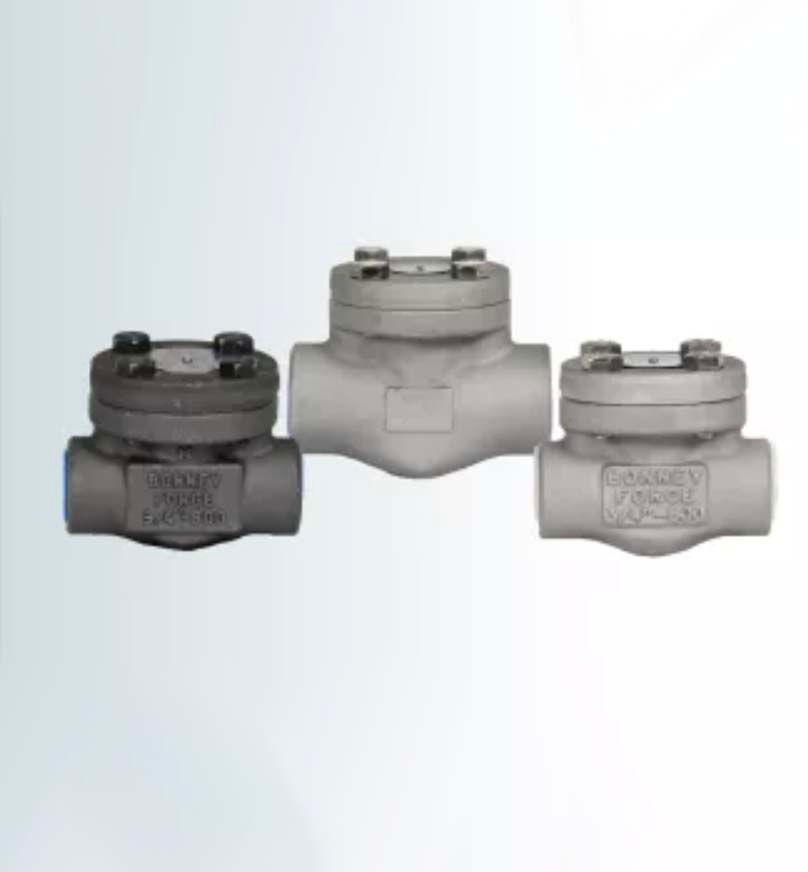
The pressure of the fluid passing through a system opens the valve, while any reversal of flow will close the valve. In Piston, or lift, check valves a body-guided disc moves within the body bore. The body guide ensures alignment of the seat and disc when the valve closes. The valve is installed with the flow under the disc, so that the inlet line pressure and flow rate will force the disc to “lift” off the seat and allow the line fluid to flow through the valve. Should the flow suddenly reverse itself, the disc will automatically and quickly, assisted by the weight of the disc, be forced to the closed position, preventing the line fluid from returning. Exercise caution when these valves are used for dirty media because that media could cause the disc to stick inside the body bore.
BALL CHECK VALVE
The function of ball check valves is similar to the piston check, but the ball check valves use a “ball” inside the body to control the movement of flow.
The ball is free to rotate, resulting in even wear and a wiping action between the ball and the seat. This feature makes ball checks useful for viscous media.
Key Features
- SIZE: 1/4 NPS - 24 NPS
- CLASS: 150 - 4500
- Design: API 602, API 594, ASME B16.34
- Inspection & testing: API 598
- Marking: MSS SP-25
- Fugitive emission: API 624, ISO 15848, TA Luft
- Face to face: ASME B16.10
- Socket weld: ASME B16.11
- Screwed ends: (NPT) ASME B1.20.1
- Flanged ends: ASME B16.5
- Butt welding ends: ASME B16.25